
How to Choose Cricket Shoes for Different Pitch Conditions in India: Red Soil, Black Soil, Turf & Cement Wickets

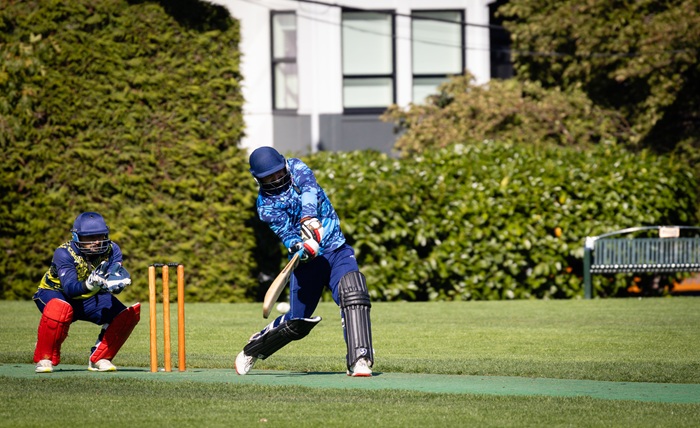
You are ten overs into a red soil pitch in Nagpur, and your front foot keeps sliding at the crease. You adjust your grip, rethink your run-up, but the problem is not your technique. It never was. Your shoes are built for a different ground entirely. In Indian cricket, the pitch under your feet changes everything, and your footwear needs to change with it.
Choosing the right cricket shoes is not just about comfort. It is about grip, support, and control on surfaces that behave in completely different ways. This guide breaks down what each pitch type demands from your footwear, whether you bat, bowl, or do both.
Reading the Ground: What India’s Pitch Types Demand from Cricket Shoes
India plays on four main surface types: red soil, black soil, turf, and cement. Each one has a distinct texture, moisture level, and behaviour, and each one punishes the wrong shoe in a different way.
Red soil pitches, common in South and Central India, tend to be hard. They crack under the sun and offer little natural grip. Bowlers need shoes with full-length rubber or six-spike metal configurations to bite into the surface. Batters benefit from firm-ground outsoles that hold position under repeated weight transfer.
Black cotton soil pitches, found mostly in Maharashtra and parts of Gujarat, swell when wet and harden dramatically when dry. Traction on these surfaces is unpredictable. A shoe with a broader spike pattern distributes pressure more evenly, reducing the risk of slipping when the pitch softens after morning dew or early rain.
Turf, Cement, and Practice Nets: The Surfaces Most Players Actually Train On
For most club and school cricketers in India, the real game happens on artificial turf or concrete. These are the surfaces where technique is built, and where the wrong shoe causes the most long-term damage.
Artificial turf rewards rubber multi-stud soles. Metal spikes dig in too aggressively and wear the surface, but more importantly, they create a stop-start movement that strains the ankle and knee over repeated training sessions. A rubber outsole with evenly spaced studs gives enough traction without locking the foot in place.
Cement nets are the toughest environment for any cricket shoe. The surface is harsh, and most injuries at the amateur level happen here. A well-cushioned midsole with a non-marking rubber outsole is the minimum requirement. For bowlers in particular, the heel-strike force on concrete is significant across a full net session.
Choosing by Role: Bowlers, Batters, and All-Rounders
Your position shapes what you need from your shoes as much as the pitch does. Cricket shoes for bowlers need to handle lateral forces at the crease and repeated heel strikes across a long spell. Look for reinforced toe boxes, firmer heel counters, and ankle-height designs that support the bowling action without restricting movement.
Batting cricket shoes prioritise lightweight construction and low-profile outsoles. A batter moves in short, sharp bursts, and added weight slows the foot. Lateral support still matters for crease movement and quick singles, but the priority is responsiveness over stability.
All-rounder cricket shoes sit between the two. They tend to offer moderate cushioning, a mid-height collar, and versatile spike placement that handles both the bowling crease and the batting end. If you play a dual role at any level, an all-rounder shoe prevents the need to compromise on either.
For practice cricket shoes, the calculus is different again. You wear them the most, on the least forgiving surfaces. Durability, cushioning, and breathability matter more here than match-day precision. A good training shoe protects the body through the volume of work, so the match shoe can do its job when it counts.
Pick the Right Shoe Before the Pitch Picks You
Your cricket shoes are not a generic part of the kit. They are the direct point of contact between your game and the ground it is played on. Red soil, black cotton, turf, and cement each ask something different from your footwear, and every position on the field adds another layer to that requirement.
Start with your most common surface. Then match your role. Then look at construction: spike type, midsole depth, and collar height. That sequence covers the ground most cricketers play on. What surface do you train on most? And does your current shoe actually suit it?